Model answer (200 words)
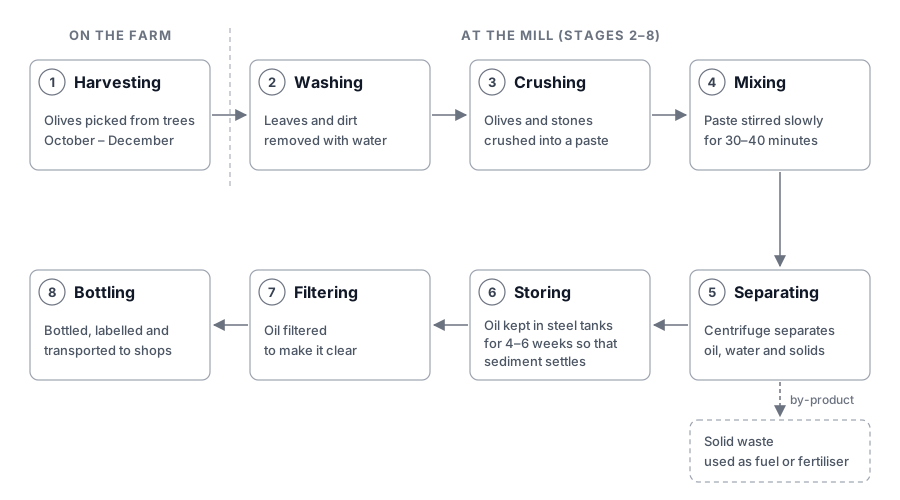
The diagram illustrates the stages involved in the production of olive oil, from the harvesting of the olives to the moment the bottled oil is sent to shops.
Overall, there are eight main stages in the process. Only the first stage takes place on the farm, while the other seven are carried out at a mill, ending with the bottling of the oil. The process also creates a solid by-product that can be reused.
To begin with, the olives are picked from the trees between October and December. They are then taken to the mill, where they are washed to remove any leaves and dirt. Next, the olives are crushed, together with their stones, to form a paste. This paste is slowly mixed for 30 to 40 minutes.
In the next stage, a machine called a centrifuge is used to separate the oil from the water and the solid waste. The waste is used as fuel or fertiliser, while the oil is stored in steel tanks for four to six weeks so that any sediment can settle. After that, the oil is filtered to make it clear. Finally, it is poured into bottles, which are labelled and transported to shops.