ALong before the invention of electric air conditioning, builders in the hot, dry regions of Iran and around the Persian Gulf had developed an ingenious way of keeping houses habitable through the summer. Rising above the flat roofs of older desert cities, such as Yazd in central Iran, are tall rectangular towers known in Persian as bâdgir, or ‘windcatchers’. To a visitor, they may look like decorative chimneys; in fact, they are carefully engineered ventilation systems that move and cool air using nothing more than wind, gravity and water.
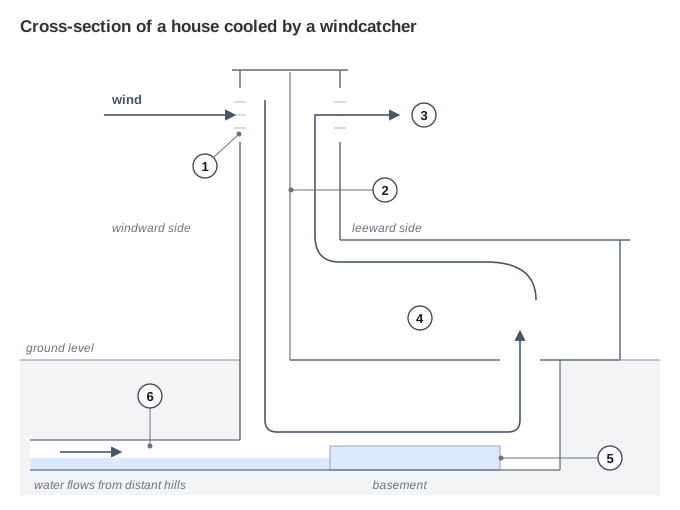
BA typical windcatcher is a hollow tower of brick or mud brick, rising several metres above the roof of the building beneath it. Near the top, on the side facing the prevailing wind, there are tall slatted openings, which admit moving air while keeping out birds and larger debris. Inside, the tower is divided by a thin partition into two or more vertical shafts. This internal division is the key to the design, because it allows air to travel down one shaft while it rises up another.
CWhen the wind blows, it is forced into the openings on the windward side and pushed down the shaft. At the same time, the wind flowing over and around the tower creates an area of low pressure on the opposite, leeward side. Air inside the house is therefore drawn upwards through the second shaft and out of the tower, so that warm, stale air is continuously replaced by fresh air from outside. Even on still days, the tower is not useless: its walls, heated by the sun, warm the air inside it, and this warm air rises and escapes, pulling air up through the house behind it in what engineers call the stack effect.
DMoving air alone makes people feel cooler, but the most sophisticated systems went further by combining the tower with water. In some houses, the incoming air was led down into a basement containing a small pool, fed by a qanat: an underground channel that carries water by gravity, sometimes over many kilometres, from distant hills. As the dry air passed over the water, some of the water evaporated. Because evaporation absorbs heat, the air lost much of its warmth before it rose through an opening in the floor into the summer room, the part of the house that families used during the hottest months.
EThe buildings themselves added to the effect. Thick walls of brick and earth absorb heat slowly during the day and release it slowly at night, so interiors stay relatively cool through the afternoon. Basements, surrounded by earth, remain cooler still, and in many households it was customary to rest underground during the hottest part of the day.
FWindcatchers are not without limitations. They work best in dry climates, since evaporation cools air far less effectively when the air is already humid. Their openings can admit dust and insects, and without regular maintenance the shafts may become blocked. Nonetheless, as cooling accounts for a growing share of the world's electricity demand, architects have begun to look again at these traditional towers. A number of modern buildings now use wind towers, often fitted with sensors and adjustable vents, to reduce their reliance on mechanical cooling. Their designers argue that a technology refined over centuries in the desert may have something to teach the cities of the future.